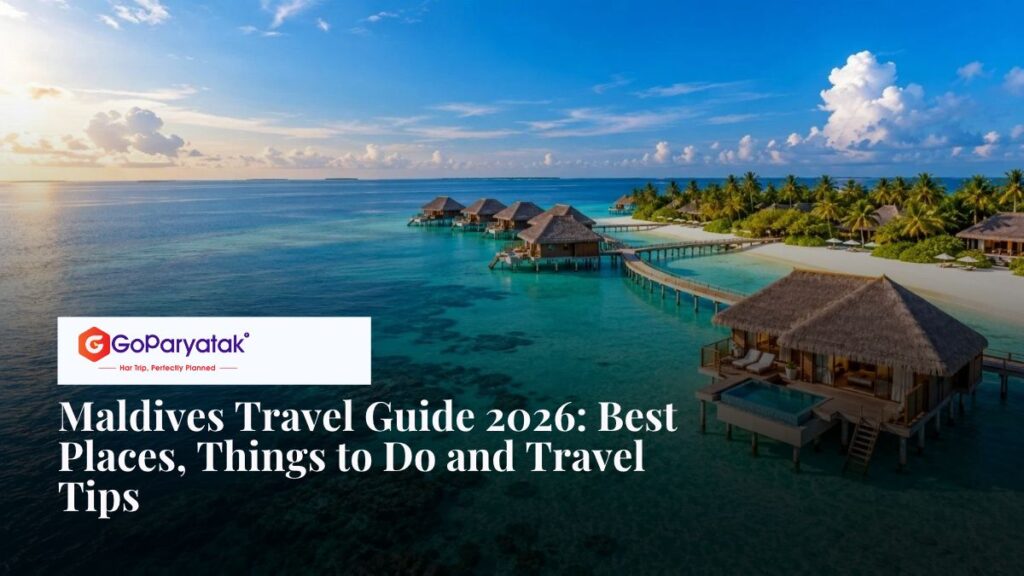
Imagine waking up to the sound of gentle waves, walking from your villa onto a white-sand beach and spending the afternoon exploring colourful coral reefs. This is the kind of holiday that attracts travellers to the Maldives. However, planning the right island stay, transfers and activities is just as important as choosing a beautiful resort.
This Maldives Travel Guide is for Indian travellers planning a holiday in 2026. It explains the best islands to visit, popular attractions, water sports, local experiences, accommodation options, travel seasons, visa requirements, flights from India and practical budgeting tips.
The Maldives is not a single resort destination. It is an island country made up of atolls, inhabited islands and private resort islands spread across the Indian Ocean. Some travellers prefer luxury overwater villas, while others choose local guesthouses that offer a closer look at Maldivian culture. Understanding these options will help you plan a trip that matches your budget and travel preferences.
Maldives at a Glance: Destination Overview
The Maldives is an island nation in the Indian Ocean, southwest of India and Sri Lanka. It consists of a chain of coral atolls made up of hundreds of islands. Its capital is Malé, a densely populated island city, while Velana International Airport is located on nearby Hulhulé Island.
The country’s geography is one of its biggest attractions. Low-lying coral islands, lagoons, reefs and sandy beaches create a landscape quite different from mainland holiday destinations.
Travellers visit the Maldives for:
- White-sand beaches and turquoise lagoons.
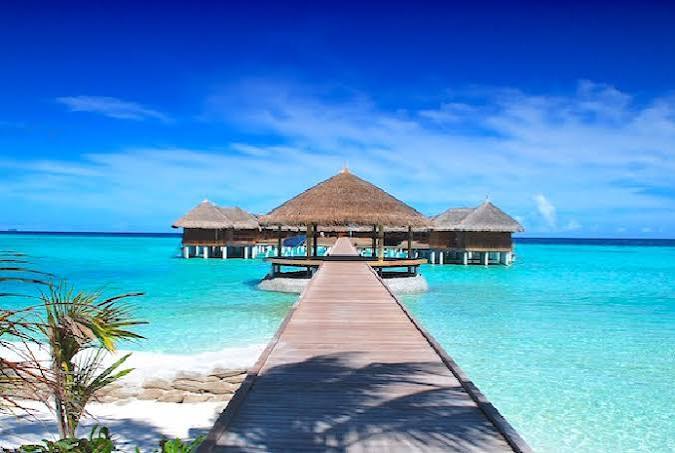
- Overwater villas and private island resorts.
- Snorkelling, scuba diving and marine life experiences.
- Sandbank excursions and sunset cruises.
- Honeymoon holidays and romantic resort stays.
- Family-friendly beach holidays.
- Local island culture, seafood and traditional Maldivian food.
Who should visit the Maldives?
The Maldives can suit different kinds of travellers, provided they choose the right island and accommodation.
| Traveller type | Suitable experience | What to consider |
| Honeymoon couples | Private resort, water villa, sunset cruise | Privacy, meal plan and transfer cost |
| Families | Family resort or local island guesthouse | Kids’ facilities, room configuration and medical access |
| Budget travellers | Local island guesthouse | Public beaches, ferry schedules and local rules |
| Adventure travellers | Island stays with dive and snorkelling access | Dive operators, equipment and sea conditions |
| Luxury travellers | Private island resort | Villa category, dining and seaplane transfer |
| Solo travellers | Guesthouses and organised excursions | Island atmosphere, transport and activity options |
Best Places to Visit in the Maldives in 2026
The Maldives offers a wide range of island experiences. Some islands are known for resorts and luxury stays, while others are inhabited communities with guesthouses, cafés and local excursions.
The following places are useful starting points when planning a Maldives holiday.
1. Malé – The Capital City
Malé is the capital of the Maldives and an important centre for administration, shopping, local life and transport connections. Many international visitors pass through the city before travelling to their resort or local island.
Unlike the open beaches of resort islands, Malé is a busy urban island with narrow streets, markets, mosques and waterfront areas.
Places to explore in Malé
- Malé Friday Mosque: A historic mosque known for its coral stone construction and traditional architecture. Visitors should respect religious access rules.
- Islamic Centre: A prominent landmark with a distinctive golden dome.
- Malé Fish Market: A local market where visitors can observe the fishing trade and everyday commercial activity.
- Republic Square: A public area near the waterfront.
- National Museum: A place to learn about Maldivian history and heritage. Check current visitor access and opening details before visiting.
Things to do in Malé
- Walk through the local streets and explore the city.
- Visit cultural and religious landmarks where visitors are permitted.
- Browse local markets and shops.
- Try Maldivian food at local restaurants.
- Explore the waterfront and observe daily island life.
Malé is not usually the main reason travellers book a Maldives holiday, but a short visit can add a cultural dimension to a resort or island stay.
2. Hulhumalé – Beaches and Convenient Accommodation
Hulhumalé is a planned island development connected to the greater Malé area. It is located near Velana International Airport and offers hotels, cafés, residential areas and a beachfront.
It can be a practical choice for travellers who need accommodation before an early flight, after a late arrival or while arranging onward island transfers.
Things to do in Hulhumalé
- Walk along the public beach.
- Explore cafés and local restaurants.
- Enjoy a relaxed evening near the waterfront.
- Arrange a short stay before travelling to another island.
- Use it as a base for airport-related accommodation needs.
Hulhumalé is different from a private resort island. Visitors should follow local dress and swimming rules at public beaches.
3. Maafushi Island – A Popular Local Island
Maafushi is an inhabited island in the Kaafu Atoll and one of the better-known local island destinations for international visitors. It has guesthouses, restaurants, activity providers and excursion operators.
Unlike a private resort, Maafushi offers a chance to experience an inhabited Maldivian community while still having access to organised tourist activities.
What to do in Maafushi
- Spend time at the designated tourist beach.
- Book snorkelling and diving excursions.
- Arrange a sandbank visit.
- Join a dolphin-watching trip with a responsible operator.
- Explore local cafés and restaurants.
- Browse shops selling souvenirs and beach essentials.
Why choose Maafushi?
Maafushi can be suitable for travellers who want an island holiday without booking a private luxury resort. Accommodation and excursion choices vary, so compare the location, facilities and activity inclusions before reserving a stay.
Remember that local islands have different rules from private resorts. Visitors should dress modestly in public areas and use designated tourist beaches for swimwear.
4. Baa Atoll – Marine Life and Natural Experiences
Baa Atoll is a UNESCO Biosphere Reserve in the Maldives. It is known for its marine ecosystems, coral reefs and biodiversity.
The atoll is particularly associated with Hanifaru Bay, where seasonal gatherings of manta rays and whale sharks may occur under suitable conditions.
Experiences in Baa Atoll
- Snorkelling in designated reef areas.
- Diving with qualified operators.
- Exploring marine life with responsible guides.
- Staying at selected island resorts.
- Learning about coral reef conservation.
Hanifaru Bay is a protected marine area with specific visitor rules. Wildlife sightings are never guaranteed, and visitors must follow the instructions of authorised operators and conservation authorities.
Baa Atoll is a good option for travellers interested in marine nature and resort experiences rather than only beach relaxation.
5. Ari Atoll – Diving and Underwater Experiences
Ari Atoll is a popular region for diving and marine activities. It includes several resort islands and inhabited islands, with opportunities to explore coral reefs and underwater habitats.
The area is known among divers for encounters with larger marine species, although sightings depend on location, season and natural conditions.
Things to do in Ari Atoll
- Try introductory scuba diving with a qualified instructor.
- Join guided snorkelling excursions.
- Explore coral reef environments.
- Arrange a boat trip to suitable nearby locations.
- Enjoy a resort stay with access to water activities.
If you are new to scuba diving, check the instructor’s qualifications, equipment standards, safety procedures and medical requirements before booking.
6. Vaavu Atoll – Quiet Island Stays and Marine Excursions
Vaavu Atoll is known for its island scenery, reef environments and opportunities for marine activities. It can appeal to travellers looking for a quieter setting away from some of the busier resort and local island areas.
The atoll includes inhabited islands and resort properties, so the experience depends on where you stay.
Experiences to consider
- Snorkelling in suitable reef locations.
- Diving with local professionals.
- Boat excursions and sandbank visits.
- Relaxed beach stays.
- Exploring local island communities.
Check transfer arrangements carefully before booking, especially if your accommodation is far from Velana International Airport.
7. Dhigurah – Long Beaches and Whale Shark Excursions
Dhigurah is an inhabited island in South Ari Atoll. It is known for its long sandy beach and access to marine excursions, including trips that may offer opportunities to see whale sharks.
The island has guesthouses, restaurants and activity providers, making it an option for travellers who want a local island experience.
What to do in Dhigurah
- Walk along the island’s beach.
- Join a responsible whale shark excursion.
- Go snorkelling with a qualified guide.
- Explore local restaurants.
- Enjoy a quieter island atmosphere.
Whale shark encounters are wildlife experiences, not guaranteed attractions. Choose operators who follow responsible wildlife interaction guidelines and do not encourage touching, chasing or disturbing animals.
8. Fuvahmulah – A Distinctive Island Destination
Fuvahmulah is a geographically distinctive single-island atoll in the southern Maldives. It has a different landscape from the typical small coral resort islands and is known for its freshwater lakes, beaches and diving opportunities.
Places and experiences to explore
- Thoondu Beach: Known for its distinctive pebble shoreline.
- Dhadimagi Kilhi: One of the island’s freshwater lakes.
- Bandaara Kilhi: Another natural freshwater lake area.
- Local neighbourhoods: Useful for understanding everyday island life.
- Scuba diving: The island attracts experienced divers interested in larger marine species.
Fuvahmulah requires additional transport planning compared with islands close to Malé. Check domestic flight connections and local accommodation before including it in a short itinerary.
9. Vaadhoo Island – Bioluminescent Beach Experiences
Vaadhoo is an inhabited island in Raa Atoll that is widely associated with the natural phenomenon often called the Sea of Stars.
At certain times, microscopic marine organisms called dinoflagellates can produce bioluminescence, creating a blue glow in the water under suitable environmental conditions.
What travellers should know
- The glowing effect is a natural phenomenon.
- It does not occur every night.
- Visibility depends on environmental and biological conditions.
- Photographs online may use long exposures or image processing.
- Visitors should avoid disturbing marine life or damaging the beach environment.
Do not book a trip solely on the promise of guaranteed glowing water. Treat it as a possible natural experience rather than a confirmed attraction.
10. Private Resort Islands – The Classic Maldives Experience
Many travellers imagine the Maldives through photographs of overwater villas, infinity pools and private beaches. These experiences are commonly offered by private island resorts.
A resort island generally operates as a self-contained holiday property, with accommodation, dining, activities and transfers arranged through the resort.
What to expect at a resort island
- Beach villas and overwater villas.
- Restaurants and meal-plan options.
- Swimming pools and beach facilities.
- Snorkelling and diving centres.
- Spa and wellness services.
- Water sports and organised excursions.
The cost can vary considerably between properties. Compare the complete stay price, including taxes, green tax where applicable, meals, transfers and activities, rather than relying only on the advertised room rate.
Best Time to Visit the Maldives
The Maldives has a tropical climate, with warm temperatures throughout the year. Its weather is influenced by two broad monsoon periods, but rainfall and sea conditions can vary between atolls and from one week to another.
The best time to visit depends on whether you prioritise sunny beach days, diving, marine encounters, quieter travel periods or accommodation deals.
Maldives seasons explained
| Period | General conditions | Travel considerations |
| November to April | Northeast monsoon; generally drier and sunnier | Popular period for beach holidays |
| May to October | Southwest monsoon; increased chance of rain and changing sea conditions | Flexible plans may be useful |
| December to March | Often popular with holidaymakers | Book accommodation and transfers in advance |
| May to September | More variable weather in many areas | Compare prices and monitor forecasts |
These are broad seasonal patterns. The Maldives can experience rain outside the main wet season, and sunny conditions can occur during the southwest monsoon.
Best time for different activities
Beach holidays: The generally drier period from November to April is often preferred by travellers who want more predictable beach conditions.
Scuba diving: Diving is possible throughout the year, but visibility and marine encounters vary by atoll, location and season. Ask local dive operators about conditions for your dates.
Manta ray experiences: Seasonal manta activity varies by location. Baa Atoll’s Hanifaru Bay is associated with seasonal manta gatherings, but sightings are not guaranteed.
Honeymoon holidays: Couples can visit throughout the year. Choose dates based on your preferred weather, resort budget and availability.
Budget holidays: Travellers with flexible dates may compare stays during the wetter months. Check the cancellation policy and transfer arrangements before booking.
Maldives Visa for Indians in 2026
One advantage for Indian holidaymakers is that the Maldives offers a tourist visa on arrival. Indian ordinary passport holders do not generally need to obtain a tourist visa in advance for a short holiday, provided they meet the immigration entry requirements.
According to Maldives Immigration, a tourist visa of up to 30 days is granted on arrival to eligible visitors of all nationalities, subject to immigration clearance.
Documents required for Indian travellers
Prepare the following before departure:
- A valid machine-readable passport with at least one month of validity under current Maldives Immigration guidance.
- Confirmed return or onward flight tickets.
- A prepaid confirmed accommodation booking at a registered tourist facility.
- Evidence of sufficient funds to cover the stay, or an approved sponsorship arrangement.
- A completed Traveller Declaration through the official IMUGA portal.
- Any required onward destination visa or travel documents, if applicable.
- A Yellow Fever vaccination certificate if arriving from or having recently travelled through a country with a relevant transmission risk.
Children and minors must have their own passports and individual Traveller Declarations.
Is Maldives visa on arrival free for Indians?
The tourist visa on arrival is issued without a pre-arranged tourist visa application fee under the current system. However, travellers must still meet the entry requirements and receive immigration clearance.
A confirmed booking and return ticket do not guarantee admission. The final decision is made by immigration officers at the point of entry.
Maldives Traveller Declaration: IMUGA
All foreign travellers arriving in the Maldives must complete the Traveller Declaration within 96 hours before arrival.
Use the official portal:
https://imuga.immigration.gov.mv
Important points:
- The form is free of charge.
- Complete it within the permitted 96-hour window before arrival.
- Each traveller, including children, needs an individual declaration.
- Save the confirmation for reference.
- Avoid unofficial websites that charge a fee for submitting the form.
The IMUGA declaration is an arrival registration requirement, not a visa.
Important: Entry rules can change. Before travelling, verify current information through Maldives Immigration and the High Commission of India in Malé.
How to Reach the Maldives from India
The Maldives is accessible from several Indian cities by air. Most international visitors arrive at Velana International Airport, located on Hulhulé Island near the capital, Malé.
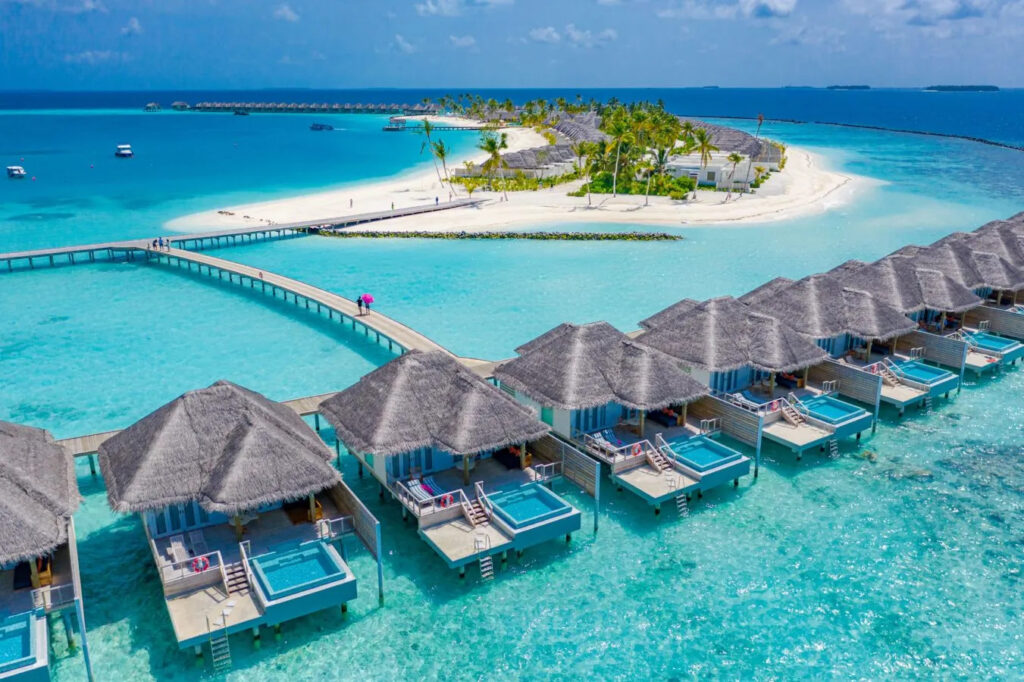
Flight availability and routes depend on the departure city and travel date. Travellers should compare direct and connecting flights before booking.
Flights from India to the Maldives
Indian travellers can compare flight options from cities such as:
- Delhi
- Mumbai
- Bengaluru
- Chennai
- Kochi
- Hyderabad
- Thiruvananthapuram
The most convenient flight depends on the departure city, airline schedule, ticket price, baggage allowance and arrival time.
What happens after arriving at Velana International Airport?
Your journey does not necessarily end at the airport. If you are staying on another island, you may need a speedboat, domestic flight or seaplane transfer.
Before booking your international flight, confirm the resort or guesthouse transfer arrangements. Some transfers operate only at particular times, and late arrivals may require an overnight stay near Malé.
Important airport planning tips
- Confirm which airport your domestic or international flight uses.
- Check whether the resort transfer is included in your accommodation booking.
- Ask for the transfer departure time and meeting point.
- Confirm luggage restrictions, especially for seaplane transfers.
- Allow enough time between international and domestic flights.
- Ask what happens if your international flight is delayed.
How to Travel Between Islands in the Maldives
Island transfers are one of the most important parts of Maldives trip planning. The country is spread across many atolls, and not every island is connected by the same transport service.
The main transfer options are speedboats, domestic flights, seaplanes and public ferries.
1. Speedboat transfers
Speedboats are commonly used for resorts and local islands that are relatively close to Velana International Airport or have suitable sea connections.
They are often arranged by the resort or guesthouse. Confirm the price, departure schedule, luggage allowance and meeting point before travelling.
2. Seaplane transfers
Seaplanes are used to reach selected resort islands, particularly those located farther from the main international airport.
They offer scenic aerial views of the atolls, but they are generally more expensive than some other transfer options. They also operate under specific schedules and daylight-related restrictions.
Ask the resort about:
- Seaplane transfer cost.
- Baggage limits.
- Waiting time after international arrival.
- Departure arrangements on the return journey.
- What happens if weather affects the flight.
3. Domestic flights
Domestic flights connect Malé with several regional airports. Travellers may then need a speedboat to reach their final island.
This option can be useful for destinations farther from the capital, but the complete journey should be checked before booking.
4. Public ferries
Public ferries connect Malé with several inhabited islands. They can be a lower-cost option for travellers staying on local islands.
However, ferry routes and schedules are not the same as resort transfers. Services may not operate every day on every route, and weather can affect operations.
Which island transfer should you choose?
| Transfer type | Best suited for | Main consideration |
| Speedboat | Nearby resort and local islands | Sea conditions and scheduled departures |
| Seaplane | Selected distant resort islands | Cost, baggage limits and operating hours |
| Domestic flight | Farther atolls | Flight schedule and onward boat transfer |
| Public ferry | Budget local island travel | Route frequency and travel time |
Never assume that airport transfers are included in the room price. Ask for a complete transfer quotation before confirming your accommodation.
Best Things to Do in the Maldives
The Maldives is not only a destination for relaxing beside a swimming pool. Its lagoons, coral reefs, beaches and local communities offer a range of experiences.
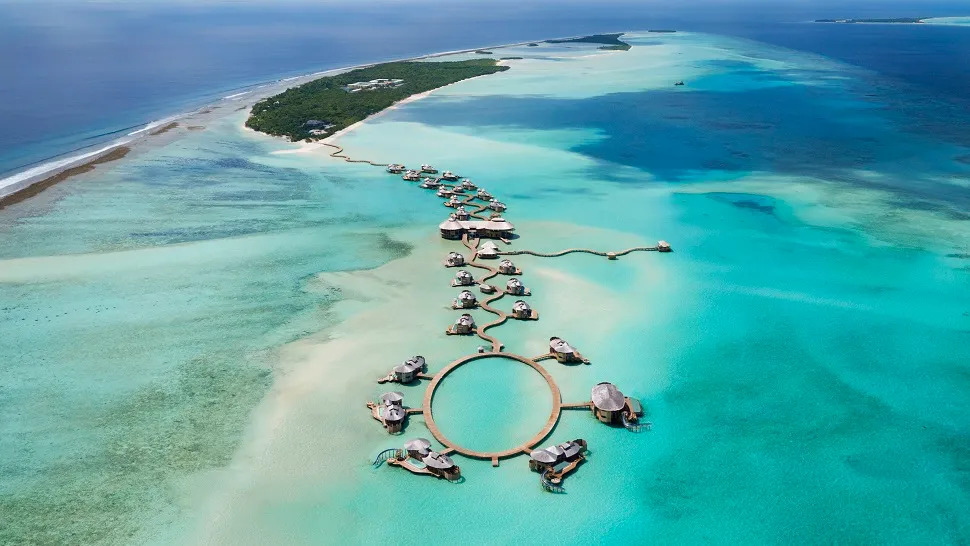
1. Snorkelling in coral reefs
Snorkelling is one of the most accessible ways to explore the Maldives’ underwater environment. Many islands and resorts offer reef access, guided trips or boat excursions.
Beginners should choose a supervised excursion, wear appropriate safety equipment and avoid touching coral or marine animals.
2. Scuba diving
The Maldives is known for its diving opportunities, including coral reefs, channels and marine life encounters.
Dive sites differ by atoll and experience level. Beginners can enquire about introductory dives, while certified divers may choose guided dives suited to their qualification.
Before booking, check the operator’s safety procedures, equipment, instructor credentials and insurance requirements.
3. Sandbank excursions
A sandbank is a small area of sand surrounded by shallow water. Boat operators arrange trips to selected sandbanks for swimming, photography and relaxation.
These natural features can change with tides and currents. Use an authorised operator and follow safety instructions.
4. Dolphin-watching cruises
Dolphin-watching excursions are available in several parts of the Maldives. Boats may encounter pods of dolphins in open water, but sightings cannot be guaranteed.
Choose operators that maintain a respectful distance and do not chase or harass marine animals.
5. Sunset cruises
A sunset cruise offers an opportunity to enjoy the changing colours of the Indian Ocean. Depending on the operator, the trip may use a traditional-style boat or a modern excursion vessel.
Check whether refreshments, transfers and other inclusions are part of the quoted price.
6. Kayaking and paddleboarding
Many resorts and selected local island operators offer kayaking and stand-up paddleboarding in suitable lagoon conditions.
These activities can be suitable for beginners, but use life jackets and follow local instructions.
7. Enjoy a spa and wellness experience
Several resorts offer spa treatments, relaxation areas and wellness facilities. Couples may consider a spa session as part of a honeymoon, while families may prefer to spend more time on beach and water activities.
8. Explore local island life
A visit to an inhabited island can provide insight into Maldivian culture, architecture, food and everyday life.
Walk through local streets, visit permitted community areas, try regional dishes and support local businesses. Dress respectfully and follow local guidelines.
9. Try night fishing
Some resorts and local operators arrange traditional-style night fishing excursions. The experience may include fishing from a boat and, depending on the package, preparing the catch.
Ask about fishing practices, equipment, safety and whether the activity follows local rules.
10. Watch the sunset from the beach
Not every holiday activity needs a separate booking. Spending time on the beach, enjoying the sea breeze and watching the sunset can be one of the simplest ways to enjoy an island stay.
Where to Stay in the Maldives: Resorts, Villas and Guesthouses
Accommodation is one of the biggest decisions when planning a Maldives trip. The country offers private island resorts, luxury overwater villas, beach villas, boutique hotels and local island guesthouses.
The right option depends on your budget, privacy requirements, meal preferences and preferred holiday experience.
1. Private island resorts
A private resort island is a popular choice for honeymooners and luxury travellers. The property usually provides accommodation, restaurants, activities and transfer arrangements.
Advantages
- Private beach and resort facilities.
- Multiple dining options at selected properties.
- Spa and wellness services.
- Water sports and diving facilities.
- A more self-contained holiday experience.
Things to check
- Whether meals are included.
- Whether drinks are included in the meal plan.
- Transfer cost and schedule.
- Taxes and environmental charges.
- Activity prices and cancellation rules.
2. Overwater villas
Overwater villas are built above the lagoon and are among the Maldives’ most recognisable accommodation options.
Some have direct lagoon access, private decks or plunge pools, depending on the resort and room category.
Before booking, check whether the villa is suitable for children, what safety arrangements are available and whether the advertised room is actually located over the water.
3. Beach villas
Beach villas provide direct access to the island’s beach or garden areas. They can be a good option for travellers who want easy beach access without paying for an overwater room category.
Compare the distance to the beach, room privacy, facilities and location within the resort.
4. Local island guesthouses
Guesthouses on inhabited islands such as Maafushi and Dhigurah can provide a different type of Maldives holiday.
They may be more suitable for budget-conscious travellers who want access to local restaurants and excursions.
However, local island stays are not the same as private resort holidays. Alcohol restrictions and modest dress expectations apply in local communities, and designated tourist beaches are used for swimwear.
How to choose the right accommodation
- Decide whether you want a private resort or local island stay.
- Compare the total room cost, not only the nightly rate.
- Check meal plans and restaurant options.
- Confirm airport transfer costs.
- Review the room location and beach access.
- Read recent guest feedback.
- Understand cancellation and payment terms.
What to Eat in the Maldives
Maldivian cuisine is strongly influenced by seafood, coconut and local spices. Fish, particularly tuna, is an important part of traditional meals.
Resorts usually offer international menus, while local island restaurants provide opportunities to try Maldivian dishes.
| Dish | Description |
| Mas Huni | A traditional breakfast dish made with tuna, coconut, onion and chilli |
| Roshi | A flatbread commonly served with breakfast |
| Garudhiya | A clear fish broth, often made with tuna |
| Fihunu Mas | Grilled fish prepared with spices |
| Bis Keemiya | A savoury pastry filled with ingredients such as egg and cabbage |
| Kulhi Boakibaa | A spiced fish cake |
| Hedhikaa | A term used for traditional short eats and snacks |
| Saagu Bondibai | A sweet dessert made using sago and coconut milk |
Food tips for Indian travellers
- Check whether your resort offers vegetarian and Jain-friendly meal options.
- Inform the restaurant about allergies and dietary restrictions.
- Ask whether a dish contains fish, seafood or animal-based ingredients.
- Compare half-board, full-board and all-inclusive plans.
- Check whether drinks and speciality restaurants are included.
- Local island restaurants may have different menus and meal timings from resorts.
Indian food is available at selected resorts and restaurants, but options vary by property. If familiar food is important to your trip, confirm availability before booking.
Maldives Trip Cost from India: What Should You Budget?
The cost of a Maldives holiday varies considerably. A local island guesthouse trip and a private island resort holiday can have very different overall expenses.
Your final budget depends on the departure city, travel dates, accommodation, meal plan, island transfer, activities and number of travellers.
Main expenses to include
| Expense | What affects the cost |
| International flights | Departure city, airline and travel dates |
| Accommodation | Guesthouse, beach villa or overwater villa |
| Airport transfers | Speedboat, seaplane or domestic flight |
| Meals | Breakfast, half-board, full-board or all-inclusive |
| Water activities | Snorkelling, diving and boat excursions |
| Local transport | Ferry, taxi and island transfers |
| Taxes and charges | Applicable accommodation and tourism taxes |
| Insurance | Coverage and duration |
| Personal expenses | Shopping, tips and other purchases |
Budget-friendly ways to plan a Maldives holiday
- Consider a local island guesthouse if a private resort is outside your budget.
- Compare flight prices across different travel dates.
- Check the complete transfer price before booking a distant resort.
- Choose a meal plan based on the property’s dining prices and your eating habits.
- Compare included activities with separately charged excursions.
- Check whether taxes and service charges are included in the quoted price.
- Avoid paying for activities you are unlikely to use.
Is a Maldives holiday expensive?
It can be, particularly when staying at a private resort with seaplane transfers, premium villas and multiple paid activities. However, the Maldives also has local island guesthouses, public ferry connections and independently arranged excursions.
The key is to compare the total holiday cost rather than judging a property by its room price alone.
Suggested Maldives Itineraries for Indian Travellers
The best itinerary depends on whether you prefer a resort holiday, a local island experience or a combination of both.
3-Day Maldives Itinerary: Short Island Break
| Day | Suggested plan |
| Day 1 | Arrive at Velana International Airport and transfer to your island accommodation |
| Day 2 | Enjoy the beach, snorkelling or a selected excursion |
| Day 3 | Breakfast, transfer back to the airport and departure |
This option is suitable for a short break. Keep the island close enough to the airport or confirm transfer timings carefully.
5-Day Maldives Itinerary: Relaxation and Water Activities
| Day | Suggested plan |
| Day 1 | Arrive in the Maldives and transfer to your resort or guesthouse |
| Day 2 | Relax at the beach and explore the island |
| Day 3 | Join a snorkelling or sandbank excursion |
| Day 4 | Enjoy a sunset cruise or another optional activity |
| Day 5 | Return to the airport and depart |
This itinerary offers a balance of relaxation and activities without changing accommodation repeatedly.
7-Day Maldives Itinerary: Resort and Local Island Experience
| Day | Suggested plan |
| Day 1 | Arrive and stay near Malé or transfer to the first island |
| Day 2 | Explore the local island and beach |
| Day 3 | Join a snorkelling or diving excursion |
| Day 4 | Transfer to a resort island, if arranged and available |
| Day 5 | Enjoy resort facilities and beach activities |
| Day 6 | Plan a sandbank trip, sunset cruise or relaxation day |
| Day 7 | Transfer to the airport and depart |
This itinerary combines local island culture with a resort experience. Confirm split-stay arrangements and transfer connections before booking.
Maldives Travel Tips for Indian Travellers
A few practical preparations can help avoid unnecessary problems during your holiday.
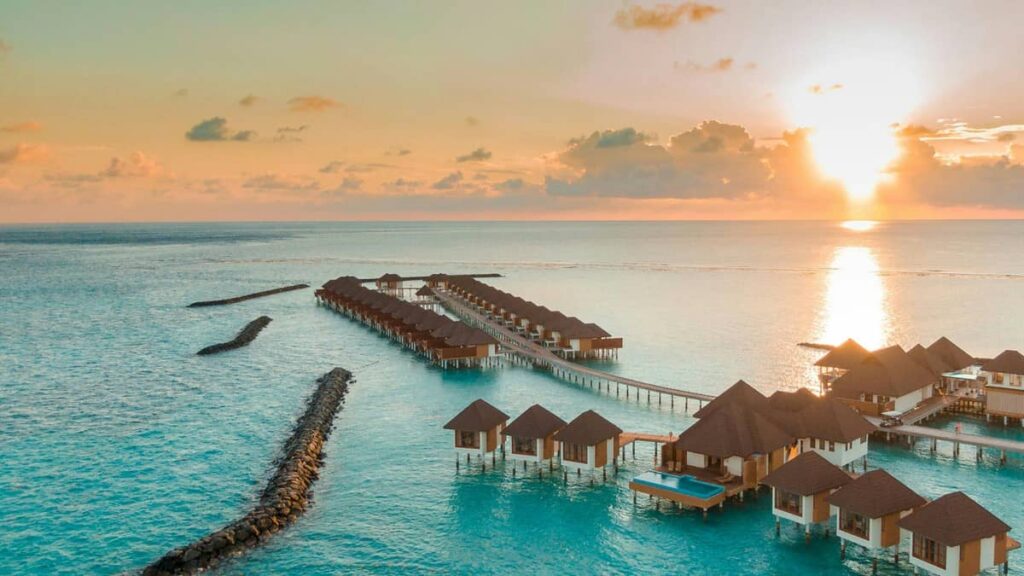
Before leaving India
- Check passport validity and entry requirements.
- Confirm return flight tickets and accommodation.
- Complete the IMUGA Traveller Declaration within the permitted 96-hour window.
- Save the hotel or resort transfer confirmation.
- Check your international baggage allowance.
- Purchase travel insurance that covers your planned activities.
- Keep copies of important documents.
Money and payments
The Maldivian Rufiyaa (MVR) is the local currency. US dollars are widely used in tourist resorts and are accepted in many tourist-related transactions, but payment arrangements vary by property.
- Check whether your resort charges in US dollars.
- Confirm which cards are accepted.
- Check international transaction fees with your bank.
- Carry a suitable payment method for local island purchases.
- Keep some cash available for small expenses where card payments may not be convenient.
Clothing and local customs
The Maldives is a Muslim-majority country. Visitors should respect local customs, particularly on inhabited islands.
- Wear modest clothing in local communities.
- Use designated tourist beaches for swimwear on local islands.
- Follow the resort’s guidance for beach and pool clothing.
- Dress appropriately when visiting mosques or religious places.
- Avoid public behaviour that may be considered disrespectful.
Private resort islands generally have different visitor arrangements from inhabited local islands. Do not assume the same rules apply everywhere.
Alcohol rules
Alcohol is generally available at licensed tourist resorts, but bringing alcohol into the Maldives is prohibited under customs rules. Do not pack alcohol in your luggage, even if it was purchased duty-free.
Health and safety
- Use reef-safe practices and avoid touching coral.
- Wear life jackets when required.
- Follow instructions from dive and water-sports operators.
- Avoid swimming in unsafe sea conditions.
- Use sun protection and stay hydrated.
- Keep travel insurance and emergency contacts accessible.
- Check the availability of medical support at your accommodation.
Common Mistakes to Avoid When Planning a Maldives Trip
A little research can help prevent unexpected expenses and transfer problems.
- Booking a resort before checking transfers: A low room price may be offset by expensive seaplane or speedboat transfers.
- Assuming all meals are included: Check the exact meal plan and drinks policy.
- Confusing local islands with private resorts: They offer different facilities, customs and experiences.
- Ignoring the IMUGA declaration: Complete the official form within the required time.
- Expecting guaranteed marine sightings: Manta rays, dolphins and whale sharks are wild animals.
- Planning island transfers too tightly: Allow enough time for airport and boat connections.
- Ignoring local dress expectations: Follow the rules on inhabited islands.
- Relying on old visa information: Check the latest official immigration guidance before departure.
Planning Your Maldives Holiday with GoParyatak
Choosing the right Maldives holiday depends on the experience you want. Some travellers prefer a private resort with an overwater villa and dining facilities, while others want to explore local islands, enjoy boat excursions and experience everyday Maldivian culture.
GoParyatak helps travellers explore holiday options and plan trips around their destination preferences, travel dates and requirements.
If you are considering a Maldives holiday from India, visit the GoParyatak Maldives tour packages page to explore the available options. You can also browse the GoParyatak tours page for other holiday ideas.
Before confirming your booking, compare the accommodation, meal plan, airport transfers, taxes, activities and cancellation conditions. If you need help discussing your requirements, use the GoParyatak contact page.
Conclusion: Plan Your Maldives Holiday in 2026
The Maldives offers much more than luxury villas and beautiful beaches. Visitors can explore local islands, discover Maldivian food and culture, snorkel around coral reefs, enjoy marine excursions and relax at private island resorts.
For Indian travellers, the most important planning decisions are choosing the right island, understanding the transfer arrangements, comparing accommodation and meal plans, and checking the latest entry requirements. A local island guesthouse and a private resort can create very different holidays, so choose according to your budget and expectations.
Use this Maldives Travel Guide to shortlist your preferred destinations, prepare a realistic itinerary and understand the costs involved. When you are ready to plan, explore GoParyatak’s Maldives tour packages and start organising your island holiday.
Frequently Asked Questions
Q1. Do Indians need a visa to visit the Maldives?
Indian ordinary passport holders generally receive a tourist visa on arrival in the Maldives, without applying for a tourist visa in advance. The standard grant is up to 30 days, subject to immigration clearance and the required documents. Travellers should carry a valid machine-readable passport, confirmed return or onward ticket, accommodation confirmation and evidence of sufficient funds. They must also complete the free IMUGA Traveller Declaration within 96 hours before arrival. Check the latest Maldives Immigration guidance before travelling.
Q2. What is the best time to visit the Maldives from India?
The Maldives is warm throughout the year. November to April is generally associated with the northeast monsoon and relatively drier conditions, making it a popular period for beach holidays. May to October is influenced by the southwest monsoon and can bring more variable weather. However, rainfall differs across atolls and sunny periods can occur during the wetter months. If you plan diving, snorkelling or marine excursions, ask local operators about seasonal conditions for your chosen island.
Q3. How many days are enough for a Maldives trip?
A three- to four-day holiday can work for travellers who want a short resort break, while five to seven days allows more time for beach activities, excursions and relaxation. A longer trip may be suitable if you want to combine a local island with a private resort or visit more than one atoll. Remember that island transfers take time and may depend on scheduled services. Choose a manageable itinerary rather than changing accommodation too frequently.
Q4. Is the Maldives suitable for a budget trip from India?
Yes. The Maldives has accommodation beyond luxury private island resorts. Local islands such as Maafushi and Dhigurah offer guesthouses, restaurants and organised excursions. Public ferries may also be available on selected routes, although schedules need to be checked carefully. Budget travellers should compare flights, accommodation, meals, island transfers and activity costs together. Local island stays have different customs and facilities from private resorts, so understand the differences before booking.
Q5. Which is better for a Maldives holiday: a local island or a private resort?
A local island is often suitable for travellers who want guesthouse accommodation, local restaurants, community experiences and organised excursions. A private resort is more suitable for visitors looking for a self-contained holiday with resort facilities, private beaches, dining options and room categories such as overwater villas. The choice depends on your budget, privacy requirements and preferred activities. Compare transfers, meal plans, taxes and included services before deciding, as these can significantly affect the total cost.